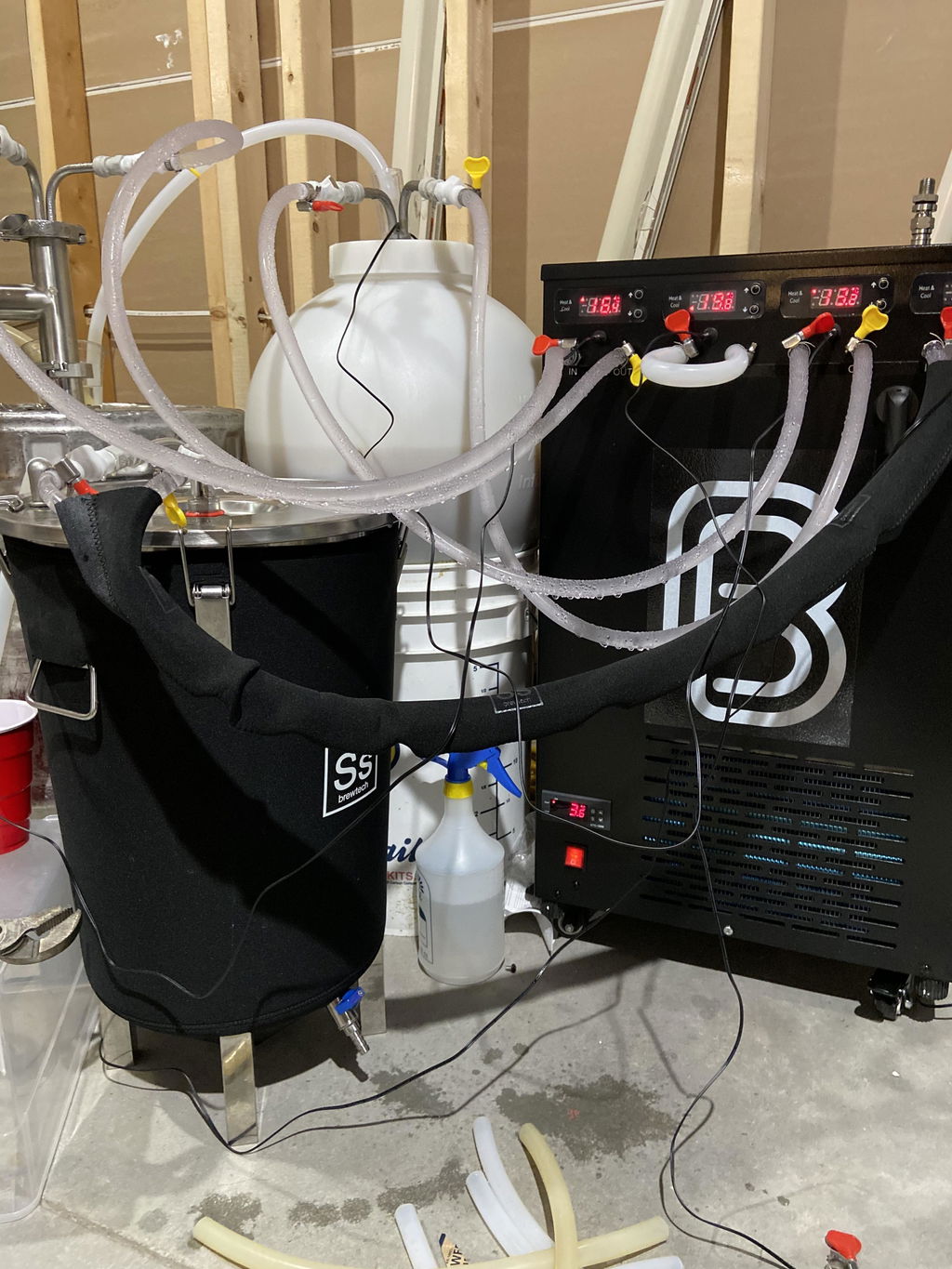
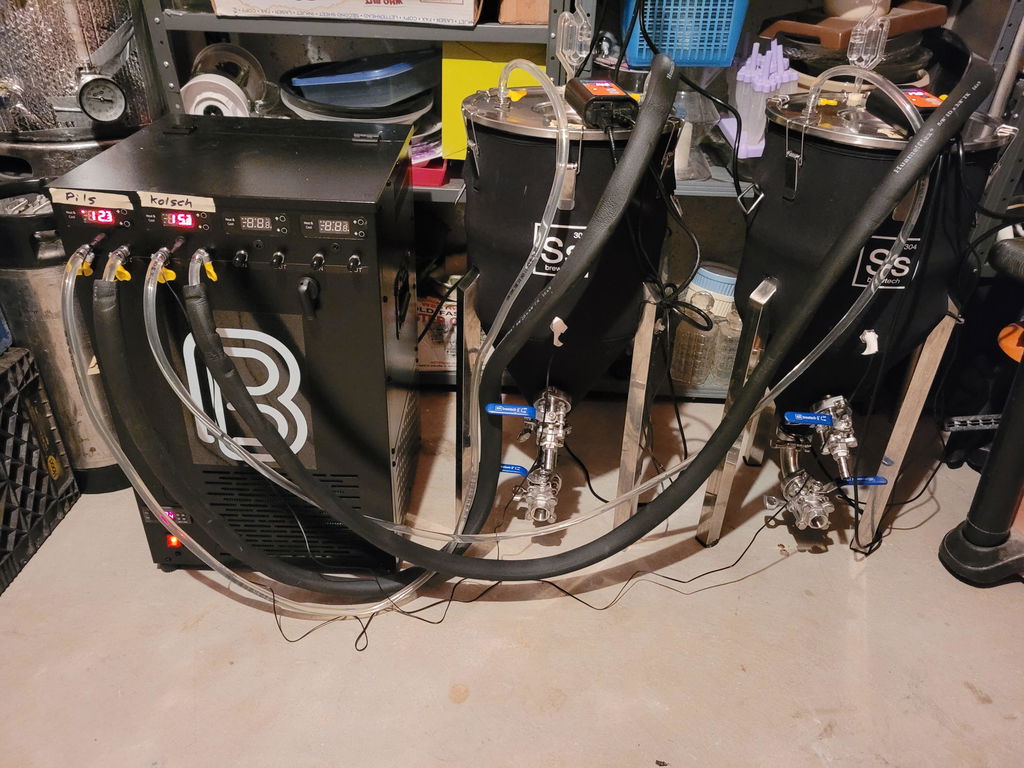
This is a great unit. It seems to be well built, it runs quietly and is easy to operate with a little practice. What drew me to it over the other models is the integrated pumps. However, unless something has changed since my purchase, the instructions that come with it are inadequate to say the least. I recommend downloading or printing the PDF manual from the More Beer website and reading it thoroughly before playing with your new toy. That being said, these instructions are lacking as well. Neither mention putting the drain plug in before filling the bath, a rather important step, and there are a few other recommendations I would make that you won’t find in the manual. First, before you fill the bath or plug it in, cut four short pieces of silicone or vinyl tubing and connect each pump outlet and inlet together. This will prevent you from blowing glycol all over the floor if one of the pumps accidentally kicks on. Second, change the set temperature set point of all four pumps to at least ten degrees above the highest ambient temp of your brewery when not in use. Again, to prevent the pumps from inadvertently coming on. The third point pertains to the glycol/water ratio. The instructions recommend a 20% glycol solution, but say nothing about the bath temperature. The 20% solution will probably be fine if you’re not going to run your bath temp. below 32 degrees. I did some online research prior to my purchase and learned that most breweries run their bath temps at 27-28 degrees f and recommend the glycol solution freeze point be 20-25 degrees lower. ie, 27f bath set point, 2f-7f glycol solution freeze point. This translates to a 33%-35% glycol ratio. The reason for this is that when the unit is under load, say during a cold crash, the compressor runs constantly and the coils drop well below 0 deg. f which causes them to become encased in ice which lowers efficiency. As a test, I did a trial run with 23 gal. of sanitizing solution. (27 gal. Blichmann fermenter in an insulated box). I started with a 25% glycol ratio with a 27f bath. I dropped the solution to 68f and held it for 24 hours, then cold crashed to 45f and held another 24 hours. After the first 24 hours there was about 1†of ice around the coils and after the 24 hour crash, that had more than doubled. So I warmed the bath to melt the ice, drained off one gallon of the 25% solution and added a gallon of glycol to raise the ratio to about 35%. The next weekend, I brewed and fermented my first batch. There was no icing during the 5 day fermentation. Immediately after the 2.25 hour drop from 68f to 45f, there was .25â€-.5†of ice on the coils, but this melted within 8 hours of the temperature leveling off, and there was no further icing during the 5 day cc. The test cold crash from 68 deg. to 45 deg. took 2 hours 50 minutes and the beer took 2 hours 15 minutes, which speaks to the efficiency of the proper glycol ratio. I’ve had the Blichmann conical since they first came out, and bought a More Beer heated & cooled about 7 years ago. Don’t get me wrong, I love my More Beer conical, but it takes a long time to cool. With the addition of the cooling coils to the Blichmann, the Brewbuilt cut my cold crash time by 80%-85%, and, in the hottest summer months, I usually can’t get the More Beer below 48 deg. The glycol chiller held it at 45 deg. no problem. You will need to insulate your fermenter as well as possible or keep it in an insulated container of some sort. If you have the ability to add coils or rods to your fermenter and you have the money, I would highly recommend this chiller, just do your homework first. Bottom line, this is the best addition to my brewery in years.Cheers


 WARNING
: This product can expose you to chemicals including Lead and lead compounds, which is/are known to the State of California to cause cancer, birth defects or other reproductive harm. For more information go to
www.p65warnings.ca.gov.
WARNING
: This product can expose you to chemicals including Lead and lead compounds, which is/are known to the State of California to cause cancer, birth defects or other reproductive harm. For more information go to
www.p65warnings.ca.gov.